The standard outlines measurement methods, equipment requirements, and testing conditions (e.g. dry/wet).
We provide two main testing approaches:
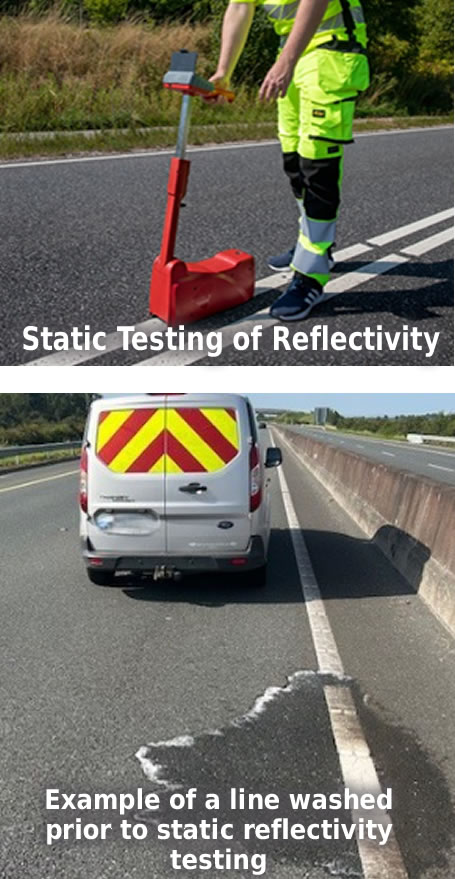
Static Testing
- Used to verify compliance with specifications and guarantee requirements.
- Full range of tests: retroreflectivity, luminance, colour, and skid resistance
- Allows for cleaning of markings prior to testing to ensure accurate results
- Ideal for detailed compliance assessment
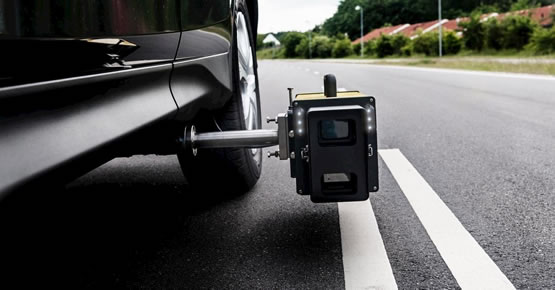
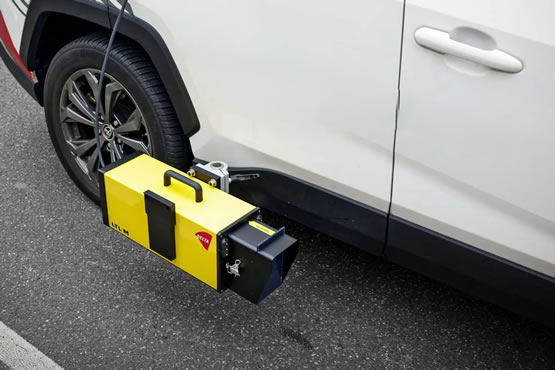
Mobile (Dynamic) Testing
- Used to assess performance across larger networks.
- Measures retroreflectivity (RL) at normal traffic speeds
- Efficient and safe for long-distance surveys
- Provides continuous data to support maintenance planning
- Results can be mapped to visualise network performance
Note: Surface contamination (e.g. dirt or debris) can affect results.
Why It Matters
Compliance with EN 1436:2018:
- Demonstrates contractual compliance
- Supports road safety
- Provides objective, measurable performance data
- Enables informed and efficient maintenance planning
In Practice
Road authorities and contractors use EN 1436 testing to:
- Specify required performance levels
- Verify compliance with guaranteed requirements
- Monitor in-service performance
- Plan maintenance and remarking programmes
Benefits of Road Marking Testing
- Confirms compliance with standards and contracts
- Provides evidence for audits and inspections
- Identifies underperforming markings early
- Supports proactive maintenance planning
- Improves road safety for all users
- Reduces long-term maintenance costs